
Stokes County, NC
Pine Hall, NC Fence Installation
Field-edge and livestock fencing on the heavy clay ground of eastern Stokes County.
- Lifetime Transferable Warranty
- Free On-Site Estimates
- Locally Owned & Operated
- Open 24 Hours, 7 Days
- Licensed & Insured
Fence Installation in Pine Hall, NC
Pine Hall is a small community in eastern Stokes County, between Walnut Cove and the Rockingham County line, in country that gave its name to the brick company founded here. That is a fitting detail, because the ground under this end of the county is heavy clay, and clay is the single biggest factor in whether a fence here stays plumb.
Clay does not drain. A post hole fills and stays filled, and every hard freeze after a wet week lifts the contents of that hole a little. Repeat that through a few Piedmont winters and a tamped post is leaning and a gate is dragging. It is the most common failure we get called out to look at, and it is entirely preventable with concrete footings set below the frost line in undisturbed soil.
Most of the work here is agricultural or semi-rural. Field edges, lanes between pastures, containment near a house, and boundary runs. Woven field wire on braced corners for cattle, mesh-backed rail where horses are kept, and black vinyl-coated chain link for dogs where the fence should hold up without dominating the view. Wood shows up around the houses, usually board privacy in back and split rail at the drive.
The other detail worth settling before anyone digs is the line itself. Rural tracts out here are cornered with iron pins and they are usually still there, under leaf litter or grown into an old fence row. We will walk the line with you and look for them. Where the pins are gone and a neighbor’s boundary is genuinely in question, a surveyor first is cheaper than a fence moved later.
Call (336) 646-7288, answered 24 hours a day and seven days a week, and we will schedule a free estimate on the property.
Fence Types We Install in Pine Hall
-
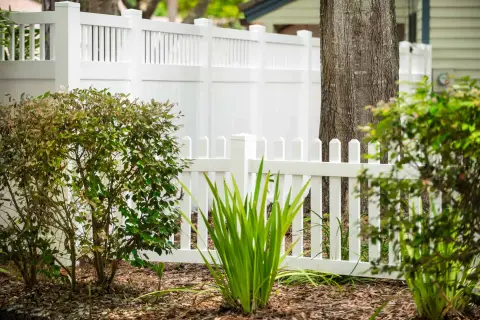
Vinyl Fencing
Low-maintenance privacy and decorative vinyl with PrivacyLock interlocking panels and SolarShield UV protection. Lifetime transferable warranty.
Explore Vinyl -
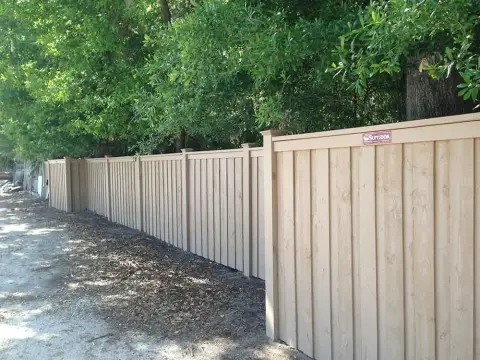
Wood Fencing
Classic privacy and decorative wood fencing in pressure-treated pine. 15-year warranty against rot and termites; lifetime warranty on posts.
Explore Wood -
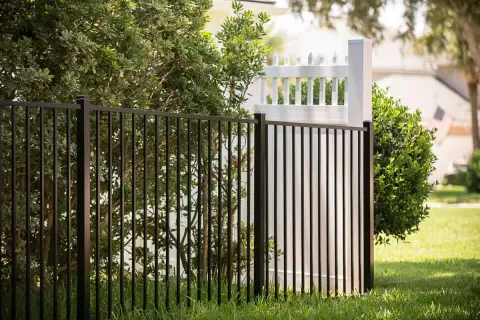
Aluminum Fencing
Powder-coated aluminum fencing for pool enclosures, decorative borders, and commercial perimeters. Lifetime transferable warranty.
Explore Aluminum -
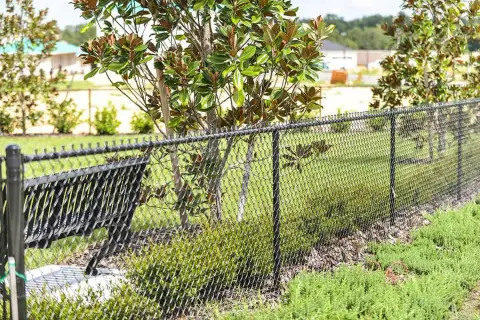
Chain Link Fencing
Affordable, durable chain link for residential yards and commercial perimeters. Vinyl-coated options for color and aesthetics.
Explore Chain Link -
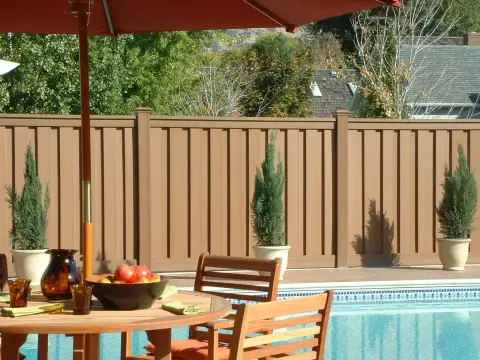
Composite Fencing
95% recycled Trex composite fencing — wood look, vinyl performance, fully eco-friendly. Top-tier lifetime warranties.
Explore Composite -
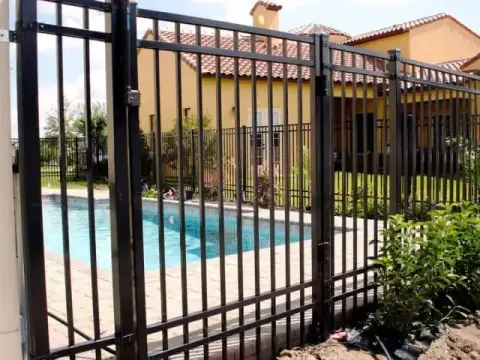
Pool Fence Installation
Code-compliant pool fences in aluminum and vinyl. Self-latching gates, proper picket spacing, and North Carolina pool barrier code expertise.
Explore Pool Fence -
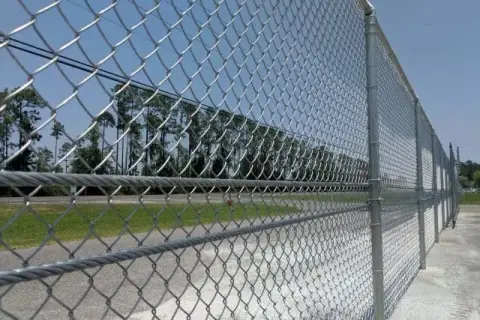
Commercial Fencing
Security perimeters, access control, automated gates, and custom commercial fencing for businesses, schools, daycares, and industrial properties.
Explore Commercial -
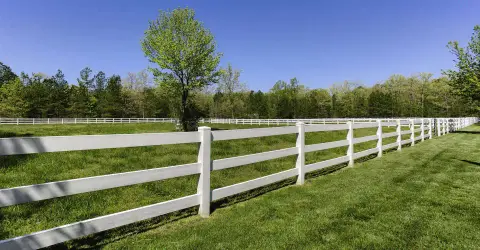
Farm & Rail Fencing
Wood and vinyl rail fencing, split rail, post-and-rail, and equine fencing for properties in Chatham, Franklin, and outer-metro the Triad.
Explore Farm
Pine Hall Fence Questions
The clay here holds water. What does that do to a fence?
It works posts loose over time if they are not set for it. A post hole in heavy clay behaves like a bucket, water sits in it, and every hard freeze after a wet stretch lifts whatever is in the hole a fraction of an inch. Do that for a few winters and a tamped post leans. Concrete below the frost line, in undisturbed soil, is what stops it, and it is why we do not offer a cheaper tamped-post option.
We only want to fence the edge of a field, not the whole property. Is that a problem?
Not at all, and it is often the smart way to spend the money. A field edge, a lane, a section between two pastures. Where it gets thought through is at the ends, because a fence that stops in open ground needs a proper braced terminal or the wire will pull it over. That is worth doing right on a short run just as much as a long one.
What is the right fence for a few head of cattle?
Woven field wire on braced corner assemblies. It holds, it does not injure an animal that pushes into it, and it does not require the constant attention that a strand fence does. The bracing is what makes it work. Cattle will find the corner that gives, and if that corner is not properly footed and braced, it will.
Our land runs toward the lake. Anything to plan around?
Wind and wet. Steadier wind off open water is hard on a tall solid fence and easy on an open one, and ground closer to the water stays soft longer than the rest of a property. Both are handled by design rather than by hoping, and both are things the estimator will want to see in person rather than take your word for over the phone.
Nearby Areas We Serve
Popular Fence Types
Get Your Free Pine Hall Fence Estimate
Tell us about your project and we’ll reach out to schedule a free, no-pressure estimate. Our line is open 24 hours a day, seven days a week.