
Surry County, NC
Fence Installation in Siloam, NC
Bottomland pasture and boundary fencing along the Yadkin River in southern Surry County.
- Lifetime Transferable Warranty
- Free On-Site Estimates
- Locally Owned & Operated
- Open 24 Hours, 7 Days
- Licensed & Insured
Fence Installation in Siloam, NC
Siloam sits on the Yadkin River in the southern end of Surry County, where NC 268 runs along the river and the land flattens out into bottomland before rising back into pasture. That transition, from river bottom to red clay upland, is the defining feature of almost every fence job here, and it is the reason a run that behaves perfectly on one end can loosen up on the other.
The bottoms are productive ground and they are also the ground that floods. When we walk a line down here the first question is how high the water gets and how often, because the honest design in a flood path is different from the design fifty yards up the bank. Braced corners and gate posts belong on firm high ground. Fence in the water’s path should let debris through rather than catch it, because a fence that dams a rising creek becomes a wall and then becomes wreckage.
Above the bottoms it is standard Surry County work: woven field wire on braced corners for cattle, mesh-backed rail where horses are kept, and board or split rail nearer the house. Clay up there does what clay does, holding water against a post and lifting it every time the ground freezes after a wet stretch, which is why every post goes into concrete below the frost line regardless of what kind of fence it belongs to.
Distance is a logistics question and we handle it by staging materials on the property and running the install as consecutive days rather than scattered visits. A long boundary with several gates is a multi-day job, but it should not be a multi-week one.
Call (336) 646-7288 whenever it is convenient, day or night, and we will schedule a time to come out and price it on site for free.
Fence Types We Install in Siloam
-
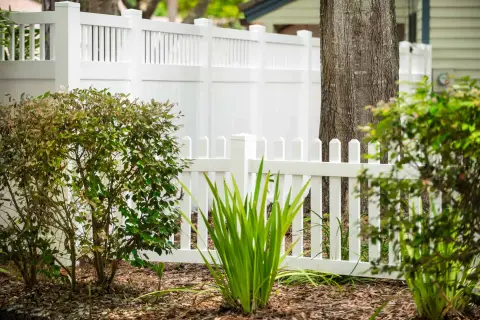
Vinyl Fencing
Low-maintenance privacy and decorative vinyl with PrivacyLock interlocking panels and SolarShield UV protection. Lifetime transferable warranty.
Explore Vinyl -
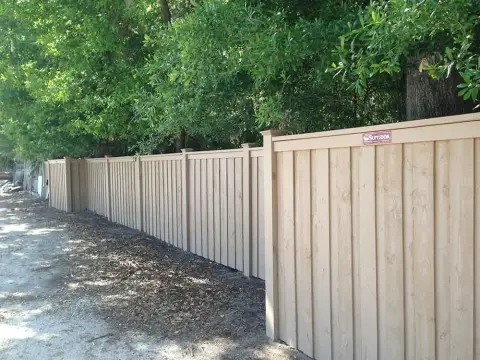
Wood Fencing
Classic privacy and decorative wood fencing in pressure-treated pine. 15-year warranty against rot and termites; lifetime warranty on posts.
Explore Wood -
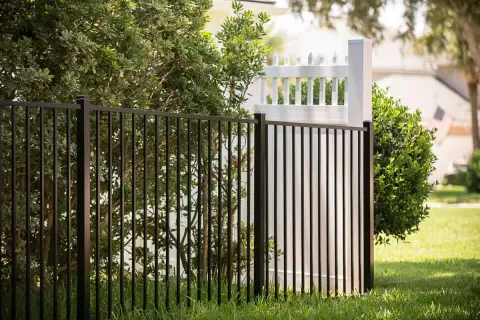
Aluminum Fencing
Powder-coated aluminum fencing for pool enclosures, decorative borders, and commercial perimeters. Lifetime transferable warranty.
Explore Aluminum -
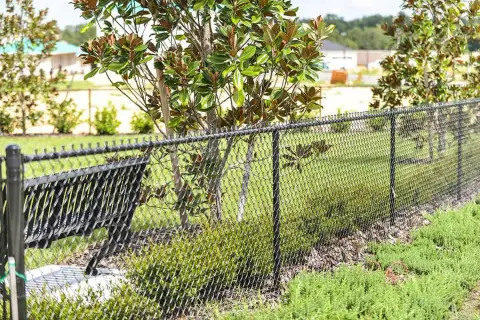
Chain Link Fencing
Affordable, durable chain link for residential yards and commercial perimeters. Vinyl-coated options for color and aesthetics.
Explore Chain Link -
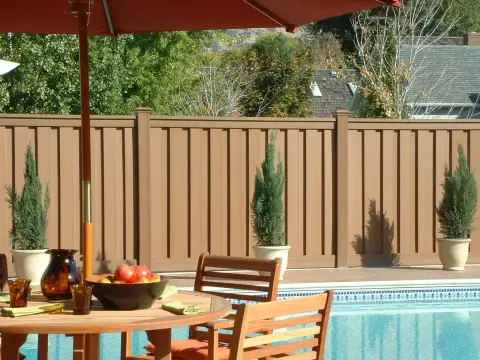
Composite Fencing
95% recycled Trex composite fencing — wood look, vinyl performance, fully eco-friendly. Top-tier lifetime warranties.
Explore Composite -
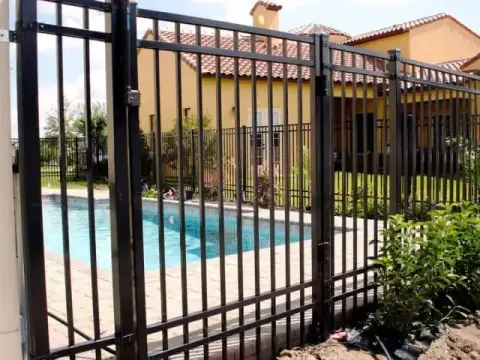
Pool Fence Installation
Code-compliant pool fences in aluminum and vinyl. Self-latching gates, proper picket spacing, and North Carolina pool barrier code expertise.
Explore Pool Fence -
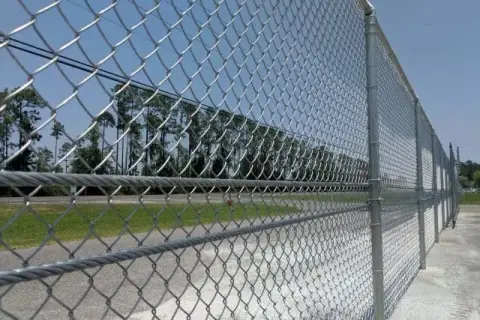
Commercial Fencing
Security perimeters, access control, automated gates, and custom commercial fencing for businesses, schools, daycares, and industrial properties.
Explore Commercial -
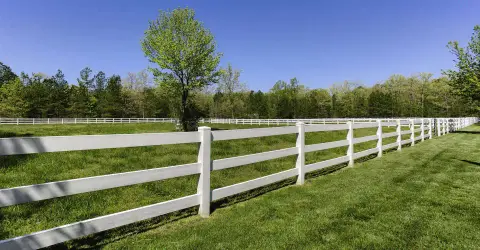
Farm & Rail Fencing
Wood and vinyl rail fencing, split rail, post-and-rail, and equine fencing for properties in Chatham, Franklin, and outer-metro the Triad.
Explore Farm
Siloam Fence Questions
Our low ground floods. Is there any point fencing it?
There is, but it should be built knowing it will get wet. On bottomland we keep braced corners and gate posts up out of the worst of it, use fence that lets water and debris pass instead of damming it, and expect that a section in the flood path is a maintenance item rather than a permanent installation. Tell the estimator how high the water actually gets, because that single number changes the whole design.
Why does the soil dig so differently on one end of the field?
Because it is different soil. River bottom along the Yadkin is silt and sand laid down over time, and the ground fifty yards up the bank is the same red clay you find everywhere else in Surry County. Sandy soil will not hold a post the way clay does, so footings in the bottom go deeper and wider. A crew that treats the whole run the same way gets a fence that is solid at one end and loose at the other.
We have dogs on several acres. Do we have to fence the whole thing?
Not usually, and it is often a waste of money to try. Most people are better served by a well-built containment area near the house sized to what the dogs actually use, with the rest of the property left open or run in boundary fence. Black vinyl-coated chain link disappears against a treeline far better than galvanized and holds up to a dog that leans on it.
Where should the gates go on a field like this?
On the high, firm ground, every time. A gate on a low spot becomes a mud hole by the second wet winter, and a sagging gate in soft ground is the single most common repair we get called about. We would rather walk the field and put the gate where the ground supports it than put it where it looks convenient on a map.
Nearby Areas We Serve
Popular Fence Types
Get Your Free Siloam Fence Estimate
Tell us about your project and we’ll reach out to schedule a free, no-pressure estimate. Our line is open 24 hours a day, seven days a week.